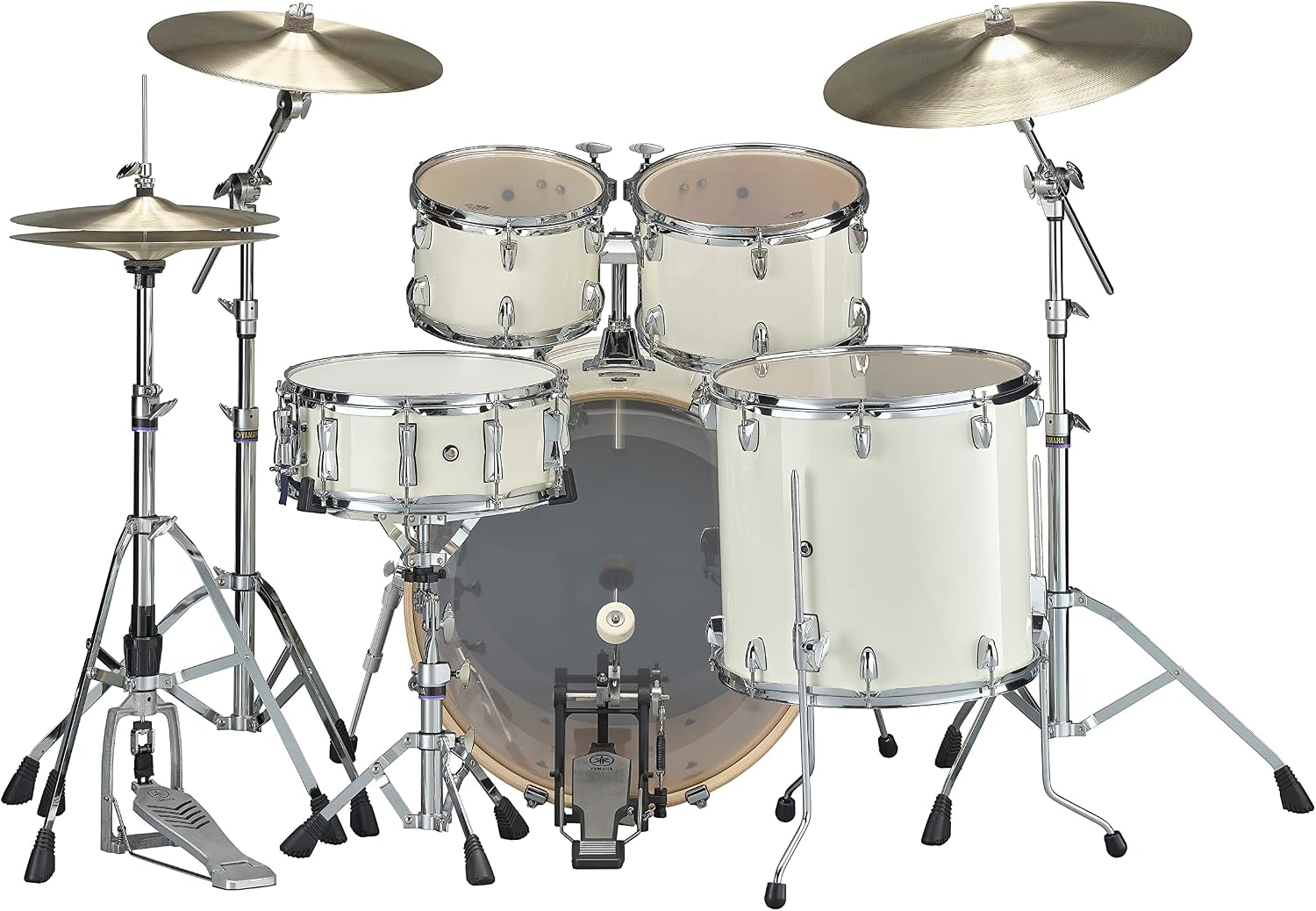
If you’ve spent any time on drumming forums lately, you already know this debate never really goes away — and it shouldn’t. Choosing between an acoustic drum kit (a traditional set of physical drums and cymbals that produce sound when struck) and an electronic drum kit (a set of trigger pads and sensors that send signals to a sound module, which generates the audio) is one of the most consequential gear decisions a drummer at the intermediate level will make. It’s not just about the sound. It’s about where you live, how you work, what you want to record, and — bluntly — how much of your budget disappears into accessories you didn’t see coming. This article lays out the real trade-offs: the dollars, the decibels, the depreciation curves, and the workflow questions that forum threads argue about for pages. By the end, you’ll have a clear decision framework you can actually use.
The Honest Cost Comparison (Including Everything You Forgot to Budget)
The sticker price is almost never the full price. This is where a lot of intermediate players get burned.
Acoustic kits at the upgrade tier — think a Pearl Export EXX, a Gretsch Renown, or a Tama Starclassic Walnut/Birch — run roughly $800 to $2,500 for the shell pack alone. That’s before hardware. A decent hardware pack (hi-hat stand, snare stand, kick pedal, two or three cymbal stands) will add $200 to $600. Cymbals are their own universe: a Zildjian A Custom or Sabian HHX pack can run $700 to $1,200. Drum heads wear out — budget $80 to $150 per full replacement, and serious players swap heads every three to six months on a gigging kit. Drumheadmagazine.com’s coverage of working drummers consistently flags head costs as the most underestimated recurring expense in acoustic setups.
Electronic kits look cheaper on paper until you account for their own hidden costs. A Roland VAD706 — Roland’s flagship acoustic-to-electronic hybrid, meaning it uses real drum shells fitted with mesh heads and electronic triggers — retails around $3,999 to $4,299. A Yamaha DTX8K or Alesis Strike Pro SE land in the $1,500 to $2,500 range. But then: a drum throne, a sturdy rack system (budget rack clamps and arms can fail under heavy playing), a monitor amplifier or drum-specific amp (a Roland PM-200 or PM-100), a noise isolation platform (often $150 to $400 for a proper riser), and, depending on your recording setup, an audio interface. Sweetwater’s electronic drums buying guide explicitly notes that a quality drum monitor is “often overlooked but essential for a realistic playing feel and sound.”
By the Numbers
| Category | Acoustic Mid-Range Setup | Electronic Mid-Range Setup |
|---|---|---|
| Shell pack / kit body | $800–$2,500 | $1,500–$4,300 |
| Cymbals / module | $700–$1,200 (cymbals) | Included in most kit prices |
| Hardware / rack | $200–$600 | $100–$400 (rack additions) |
| Monitoring / amp | Mics + interface ($300–$800) | Drum amp ($200–$600) |
| Noise mitigation | Rugs, risers ($50–$200) | Isolation platform ($150–$400) |
| Recurring (heads, tips) | $80–$200/year | $30–$80/year (mesh heads last longer) |
The takeaway: total first-year cost of ownership is closer than the kit prices alone suggest, and acoustic setups often win on long-term cost once you stop counting cymbals as capital purchases.
Sound, Feel, and the Playing Experience: What Owners Actually Report
This is where the conversation gets honest and a little uncomfortable for both camps.
Acoustic kits at the intermediate tier produce sound that no electronic kit has fully replicated. The resonance of a real shell, the shimmer of a live cymbal, the way a snare responds differently depending on where you strike it — these are physical phenomena that electronic pads approximate, sometimes brilliantly, but never identically. Sound On Sound’s technical overview of electronic drum technology describes the fundamental challenge: “trigger-to-sound conversion introduces latency and a response curve that, even at its best, differs from the physics of a struck membrane.” For drummers who play live acoustic gigs, sit in at rehearsals, or are developing feel and dynamics, this matters enormously.
Electronic kits have closed the gap dramatically, especially at the premium end. The Roland VAD series uses genuine drumheads on real shells with sensors underneath — owners on long-run reviews consistently report that the playing feel is “90 percent of the way there” for practice and recording purposes. MusicRadar’s roundup of the best electronic drum kits in 2026 rates the Roland VAD706 as the benchmark for feel realism, noting that “the snare response in particular has convinced players who previously dismissed e-kits outright.” Mesh heads — the type of pad used on most quality electronic kits, made of a woven synthetic material that gives and rebounds like a real head — are quieter and easier on joints than acoustic equivalents, a point that comes up repeatedly in drummer forums among players over 35.
The feel gap matters most for two groups: players who are actively developing technique (where real rebound and acoustic response train muscle memory more accurately) and players who gig acoustic regularly (where practice-room feel needs to translate to stage). If you’re primarily a home studio producer or a bedroom player in an apartment, the calculus flips.
Volume, Neighbors, and the Logistics Reality
Let’s be direct: acoustic drums are loud. A full acoustic kit generates roughly 90 to 130 decibels at the player’s position — that’s comparable to a chainsaw or a rock concert at close range. Unless you have a dedicated, sound-treated space or understanding neighbors, an acoustic kit creates real-world problems that no amount of tone quality fixes.
Electronic kits solve this almost completely. With mesh heads and a good drum monitor at moderate volume, an e-kit sits around 50 to 65 decibels — quieter than a normal conversation. Add a proper isolation platform (a layered riser that absorbs impact vibration traveling through floors), and apartment and townhouse living becomes genuinely viable. MusicTech’s coverage of home studio drum setups rates isolation platforms as “the single most impactful upgrade for electronic drummers in shared buildings.”
The practical split here:
- House or studio with a dedicated drum room: acoustic is viable and usually preferable.
- Apartment, condo, shared wall situation, or noise-restricted hours: electronic is not just convenient — it may be the only option that keeps you playing consistently.
- Hybrid: you gig acoustic but need a practice solution at home: an e-kit as a practice tool alongside an acoustic rig for shows is the setup a lot of working drummers land on. It costs more up front but solves both problems cleanly.
Recording, Integration, and Studio Workflow
This is where intermediate players often have the most blind spots, and where the decision branches hardest depending on your actual creative workflow.
Acoustic recording done right is expensive. Getting a good drum sound in a home studio requires a treated room (acoustic panels, bass traps), a multi-mic setup (overhead pair, kick mic, snare mic, hi-hat mic, toms — easily six to eight microphones for a full picture), and an audio interface with enough preamp inputs to handle them all. A Universal Audio Apollo x8 gives you the preamps and processing quality to do this justice, but it costs $1,500 to $2,000. Budget interfaces cut corners that show up in the mix. Producers and engineers at Sound On Sound consistently note that poorly recorded acoustic drums are one of the most common problems in home studio productions — and fixing them in the mix is a skill in itself.
Electronic kits record with a USB cable. Most modern e-kits send MIDI data (a standardized digital signal language for musical instruments) directly to your DAW — your digital audio workstation, the software where you record and produce music, like Ableton Live, Logic Pro, or Reaper. From there, you can trigger any drum samples you want: a dry studio sound, a massive arena kit, a vintage Ludwig recorded in a great room. The Roland VAD706’s module, for instance, connects via USB and integrates cleanly with Native Instruments’ Komplete library, giving producers access to meticulously sampled acoustic kits without needing the room or the mics. For home producers who want maximum flexibility and consistency across sessions, this workflow is genuinely powerful.
The live recording argument still favors acoustic for players who want the organic unpredictability and room sound that defines great drum tracks. But for practice-to-production workflows, the electronic path is cleaner and less dependent on room quality.
Resale Value and Depreciation: Which Purchase Rewards You Later
This is a dimension most buyers skip entirely, and they shouldn’t.
Quality acoustic shells hold value well. A used Tama Starclassic, Gretsch Renown, or DW Collector’s Series shell pack in good condition retains 60 to 75 percent of its value on the used market, sometimes more if the finish is desirable and the hardware is intact. Vintage acoustic kits — a 1960s Ludwig, a 1970s Slingerland — can appreciate. Cymbals from Zildjian, Sabian, and Meinl also hold value reliably; a used K Custom or HHX cymbal sells within weeks on the used market. Drumhead Magazine’s gear coverage frequently observes that acoustic kit purchases, treated as long-term investments, behave more like instruments than consumer electronics.
Electronic kits depreciate like consumer technology. A Roland TD-50 module from four years ago has lost substantial value simply because the TD-50X exists now. The Roland VAD706 will face the same pressure as Roland’s next-generation module ships. Owners on aggregated reviews consistently note that e-kits bought new at $3,000+ can sell for 40 to 55 percent of purchase price within three years. The exception is the physical shell component of hybrid e-kits — a real drum shell retains some value independently of the electronics inside it.
If resale matters to your budget calculus: acoustic wins clearly. If you expect to want the latest technology in two to three years, factor in a steeper depreciation curve on the electronic side.
The Decision Rule
Here’s the honest if/then framework:
If you have a space where acoustic volume is viable, gig regularly or plan to, and care about feel development and long-term resale value → buy acoustic. Prioritize the shell pack and hardware first; upgrade cymbals gradually. A Tama Starclassic or Pearl Masters shell pack bought used is a long-term investment that pays back.
If you’re in a volume-restricted living situation, primarily record or produce at home, and want immediate DAW integration with minimal mic overhead → buy electronic. Target the Roland VAD series or Yamaha DTX8K tier if budget allows; the playing feel and sound quality gap between these and budget e-kits is real and owners notice it quickly.
If you gig acoustic but need a daily practice tool → buy both, sequentially. A used mid-range e-kit as your apartment practice rig, paired with an acoustic kit for rehearsal and shows, is the working drummer’s pragmatic answer. It’s more cash up front, but it solves the volume problem without sacrificing live performance feel.
The right kit is the one you’ll actually play every day. Everything else — specs, modules, shell materials — is secondary to that.