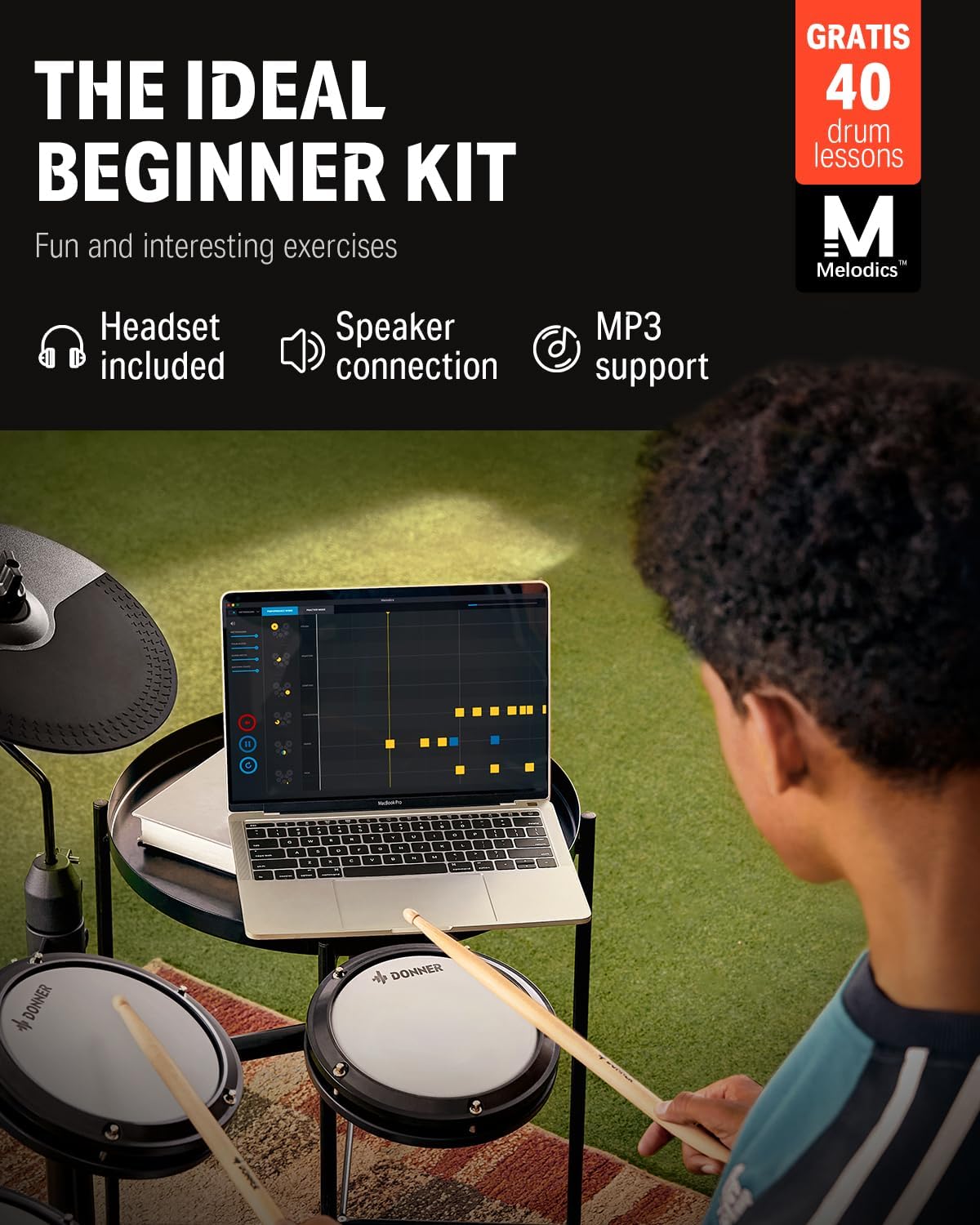
Picture this: you’ve got a second-floor apartment, walls thin enough to hear your neighbor’s phone calls, and a lease renewal coming up. You want to play drums — really play them — without turning your landlord into your enemy. That’s exactly where electronic drum kits shine. An electronic drum kit replaces the large acoustic shells and cymbals (the wooden and metal pieces that create sound the traditional way) with compact rubber or mesh pads — surfaces you strike that send a signal to a small computer brain called a module, which then plays a recorded drum sound through headphones or speakers. The key advantage for apartment life is that most of the physical impact noise is dramatically reduced. But here’s the problem nobody talks about in the product listings: not all electronic kits are equally quiet, equally playable, or equally honest about what they cost you out of the box. This guide breaks down the decision by budget tier, names the tradeoffs directly, and gives you a clear framework for choosing the right kit before you sign anything.
| EDITOR'S PICK[Yamaha DTX6K-X Electronic Drum](https://www.amazon.com/dp/B08K44HKBT?tag=greenflower20-20)… | Mid-tier[Donner DED-200 Electric Drum Se](https://www.amazon.com/dp/B08DKHYLLV?tag=greenflower20-20)… | Budget pick[Donner DED-80 Electronic Drum S](https://www.amazon.com/dp/B09ZXR98LJ?tag=greenflower20-20)… | |
|---|---|---|---|
| Pads | Silicone | Mesh | Mesh |
| Cymbals | — | 2 w/ choke | — |
| Kits | 70 | 31 | — |
| Sounds | — | 450+ | 180+ |
| Price | $899.99 | $383.99 | $239.99 |
| See on Amazon → | See on Amazon → | See on Amazon → |
Why “Quiet” Is More Complicated Than It Sounds
There’s a word you’ll see plastered across nearly every electronic kit listing: mesh heads. A mesh head is literally a woven fabric surface — similar in texture to a window screen — stretched over a drum pad. Strike it with a stick, and it absorbs the impact rather than rebounding hard like a solid rubber pad. That absorption does two things: it feels closer to a real drumhead, and it reduces the sharp transient impact transmitted into the floor below you.
Here’s the important distinction: mesh heads reduce airborne noise (the acoustic crack of a stick hitting something) almost entirely when you’re playing through headphones. What they do not fully eliminate is structural vibration — the energy that travels through your stick, into the pad, through the stand, and into your floor, where it radiates as low-frequency rumble to the apartment below. Drumhead Magazine’s coverage of mesh technology notes that mesh pads can reduce stick-impact airborne sound by as much as 70–80% compared to acoustic drums, but floor transmission remains a live variable dependent on your stand, your floor material, and whether you invest in isolation.
That’s why “noise level” is really a three-part equation:
By the numbers:
- Mesh pads: ~70–80% reduction in airborne impact noise vs. acoustic shells (Drumhead Magazine)
- Foam/rubber isolation risers: estimated 40–60% reduction in floor-transmitted vibration (manufacturer-rated figures for products like the Roland NE-10 Noise Eater)
- Hi-hat and bass drum pedal: the two most floor-transmitted sound sources in any electronic setup
Translation: the pad technology matters, but the stand and riser system is often the bigger variable for actual neighbor noise. Budget for it accordingly.
The Three Budget Tiers — and What You’re Actually Buying
Tier 1: $300–$600 — Getting In the Door
The Roland TD-02KV and Alesis Nitro Mesh Kit are the two names that dominate this range, and for legitimate reasons. Both include full mesh heads on the snare (the most-struck pad) — though the Alesis Nitro Mesh extends mesh to all tom pads, which gives it a tactile edge over some same-priced Roland configurations.
Owners across aggregated forum discussions and retailer reviews consistently highlight the Alesis Nitro Mesh as the better feel value at entry level — the mesh tension is workable and the module includes enough sounds to hold a beginner’s interest. The Roland TD-02KV, per Sweetwater’s electronic drum kit guide, leans on Roland’s module quality and long-term software support as its competitive differentiator rather than pad count or complexity.
The honest tradeoff at this tier: the rack systems (the metal frames that hold the pads) in sub-$500 kits are lightweight by design. That’s fine for low-velocity practice, but players who hit hard will notice wobble and drift. Several long-run reviews on MusicRadar note that drummers who push past beginner intensity often replace the rack within 12–18 months. Factor in roughly $80–$150 for a Roland or Gibraltar upgrade rack if you’re already playing at intermediate volume.
Also: the module (the brain) at this price point is a ceiling, not just a starting point. You won’t grow into it — you’ll grow out of it. The decision rule here is simple: if you’re within 12 months of knowing whether drumming is a serious pursuit, this tier makes sense. If you’re already gigging or producing at any level, skip to Tier 2.
Tier 2: $700–$1,500 — The Real Apartment Drummer’s Sweet Spot
This is where the decision gets more interesting — and where the tradeoffs become genuinely worth mapping out.
Roland TD-17KVX2 (~$1,100–$1,200 street price as of mid-2026) is the dominant recommendation in this range, and the reasons aren’t mysterious. The module includes Bluetooth for headphone pairing, onboard coaching functions, and Roland’s mesh feel is consistently rated among the most “acoustic-like” in owner reports. Sound On Sound’s coverage of Roland’s V-Drum line has repeatedly cited the TD-17’s module as a benchmark for realistic dynamics at this price — meaning the harder you hit, the more the sound responds in a convincing way, rather than just getting louder.
Yamaha DTX6K2-X (~$900–$1,050) is the challenger worth serious consideration. Yamaha’s 3-zone cymbals — where a single cymbal pad detects hits at the edge, bow, and bell separately, just like a real cymbal — are legitimately ahead of Roland’s equivalent at similar price points, according to comparative coverage from MusicRadar. The module interface is less intuitive, but the feel and zone detection earn consistent praise from intermediate players with acoustic drumming backgrounds.
The apartment-specific variable: neither of these kits includes a noise isolation riser in the box. The Roland NE-10 Noise Eater pad (designed to sit under the entire kit rack) runs approximately $80–$100 and is nearly universally recommended by owners in multi-unit housing. DIY alternatives — layers of foam, tennis ball riser platforms — are discussed extensively in drumming communities, and the consensus from experienced apartment players is that commercial isolation platforms outperform DIY for consistent low-frequency attenuation, even if the physics of both approaches are similar.
Hidden costs to budget at Tier 2:
- Isolation riser or platform: $80–$200
- Mesh head replacements (12–24 months of regular play): $15–$35 per head
- Headphone amplifier or monitor mixer if playing with backing tracks: $50–$150
- Kick tower upgrade (the pedal attachment matters for feel and noise): $80–$150
Total real cost of a $1,100 Roland TD-17KVX2 setup built for genuine apartment playability: closer to $1,400–$1,600 once you’re properly isolated and equipped.
Decision frame: If you’re producing music and need MIDI output (the digital signal standard that lets your drum hits trigger sounds in recording software like Ableton or Logic), both the Roland and Yamaha at this tier output full MIDI over USB. That’s not a nice-to-have if you’re a beat architect — it’s the feature that makes the kit double as a production tool, which fundamentally changes the value calculation.
Tier 3: $1,800–$4,500 — Professional Infrastructure
If you’re investing at this level, you’re not buying a practice pad replacement — you’re buying a production and performance instrument that happens to be apartment-legal.
The Roland VAD706 (~$3,800–$4,200) is the consensus answer for players who want acoustic drum feel in a near-silent shell. The “VAD” stands for V-Drums Acoustic Design — these are actual wooden drum shells with mesh heads stretched over them, giving you the resonance and bounce feel of an acoustic kit while the electronic internals handle the rest. Sound On Sound’s detailed coverage of the VAD series notes that the wooden shell construction changes the stick rebound characteristic meaningfully, making extended practice feel less fatiguing than solid-frame electronic kits.
The honest counterpoint: the VAD706 is expensive, physically large (not meaningfully smaller than a mid-size acoustic kit), and the module — Roland’s TD-50X — is powerful enough that most players will use only 20–30% of its feature set. If you’re not actively recording or performing, you’re paying for capability you won’t access.
The Yamaha DTX10K-M (mesh variant, ~$2,200–$2,500) is the serious alternative at the top of Tier 2 / entry of Tier 3. Its module’s feel detection and dynamic response are rated by aggregated owner reviews as among the most realistic for acoustic-to-electronic transition players. MusicRadar’s comparative coverage has cited the DTX10K-M as the preferred recommendation for drummers transitioning from touring acoustic kits who need a home practice solution that doesn’t insult their hands.
Resale reality at Tier 3: Roland holds value well. VAD series kits, per observations from the used gear market, tend to resell at 60–75% of original price within 2–3 years — strong for electronic gear, which depreciates faster than quality acoustic hardware. The Yamaha DTX10K also resells respectably. Neither is a money pit if you buy new and take care of them; both lose ground to boutique acoustic kits in long-term value retention, which is worth knowing before you commit.
The One Variable Nobody Budgets For: Your Bass Drum Pedal Setup
Here’s what experienced apartment drummers report consistently, and it’s worth saying plainly: the bass drum (kick drum) pedal is where most noise complaints actually originate. Even on a full-mesh electronic kit, a standard kick pedal striking a beater pad transmits substantial energy into the floor on every stroke. The impact is low-frequency — the kind that travels through concrete and wood framing with almost no attenuation.
Solutions that owners report actually working:
- Roland KD-10 or KD-A22 mesh kick pads over rubber alternatives — mesh absorbs impact better at the source
- Full kick isolation risers (dedicated products, not general foam pads) under the pedal and stand legs
- Reducing beater weight and spring tension — a lighter, faster stroke hits quieter than a heavy-handed one
If you’re in an apartment with a shared floor slab, the kick solution is not optional — it’s the first thing to solve before you buy anything else.
If X, Then Y: The Decision Rules
If you’re still figuring out whether drumming is your thing and budget is tight: Alesis Nitro Mesh with a Roland NE-10 riser. Don’t spend more until you’ve put in six months of real practice.
If you’re an intermediate player who gigs acoustically and needs a home practice solution: Roland TD-17KVX2 or Yamaha DTX6K2-X, budgeted at $1,400–$1,600 all-in with isolation and headphone setup. Buy the isolation platform before the first practice session, not after your downstairs neighbor knocks.
If you’re producing beats and need a live electronic kit that doubles as a MIDI controller for your DAW: the TD-17 or DTX10K series; either one connects cleanly over USB-MIDI without additional hardware.
If you’re a serious drummer treating this as professional infrastructure and you want acoustic-feel daily practice: Roland VAD706. Accept the price, budget the isolation properly, and recognize that you’re buying an instrument — not a gear stop-gap.
The mesh revolution in electronic drumming is real, and the best current kits genuinely reward serious players. Just go in with honest cost expectations, account for isolation from day one, and you’ll have an instrument your neighbors can live with — and you can grow with for years.