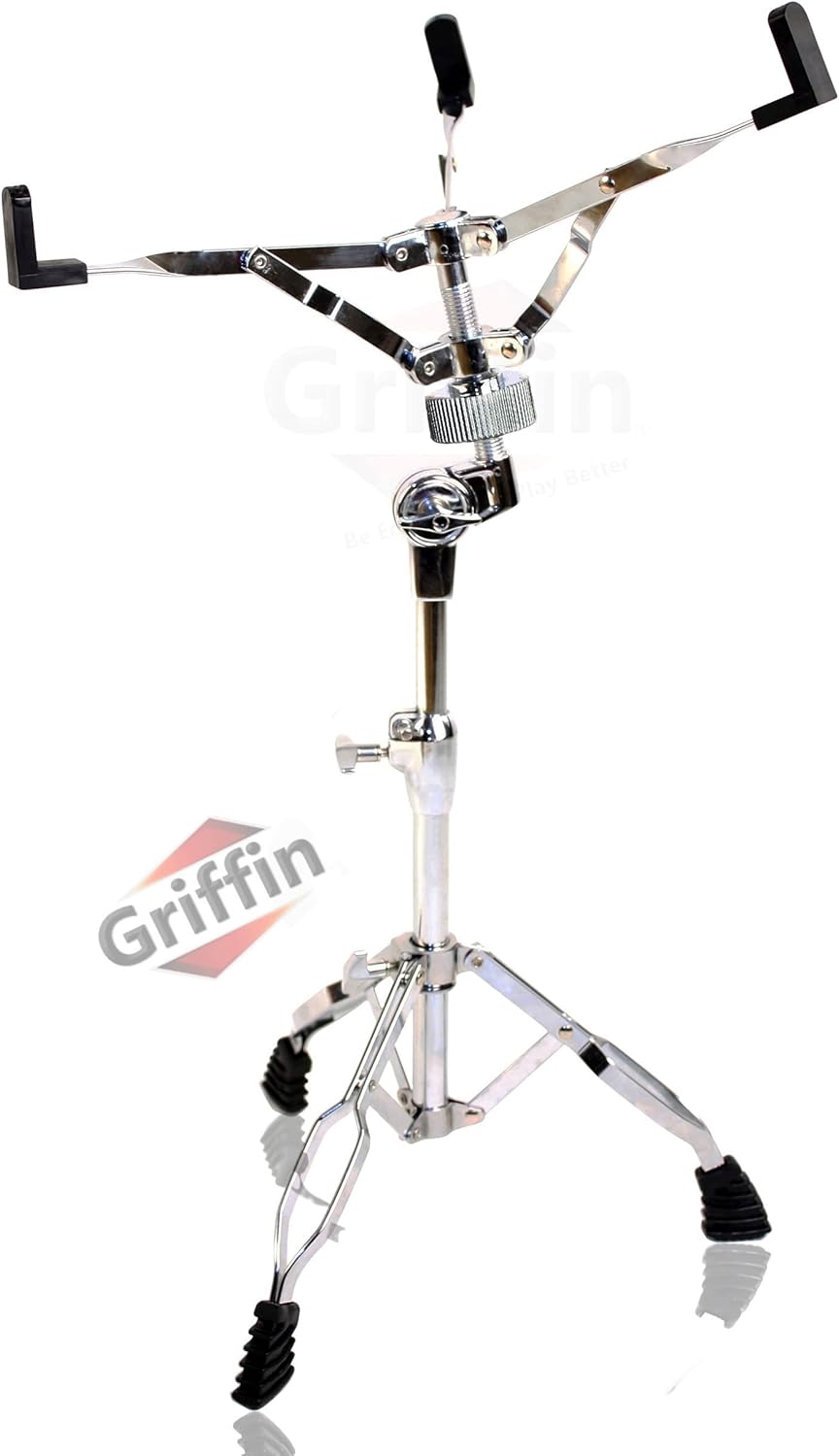
If you’ve ever priced out a drum kit and noticed the number was suspiciously low, here’s what got left out: the hardware. Drum hardware is the collective term for all the metal stands, mounts, clamps, and pedals that actually hold a kit together — hi-hat stands, snare stands, boom cymbal stands, bass drum pedals, and tom mounts. Without them, your shells and cymbals are just expensive discs sitting on a floor. Hardware packs bundle these pieces together, usually at a discount compared to buying each item separately, and they’re sold at roughly three weight tiers: lightweight (often called “200 series” style by major brands), medium-duty (“500 series”), and heavy-duty (“900 series” and above). Which tier you need isn’t just about how much you can spend — it’s almost entirely about how you use the kit. A drummer who plays the same spare bedroom every day has completely different demands than one loading into a different venue four nights a week. This guide breaks down exactly where those demands diverge, shows you the real numbers, and ends with a clear decision rule.
| EDITOR'S PICK[Yamaha Lightweight Premium HW-3](https://www.amazon.com/dp/B07F9DDMDP?tag=greenflower20-20) | Mid-tier[Yamaha HW-780 Single-Braced 700](https://www.amazon.com/dp/B0029RPOCQ?tag=greenflower20-20)… | Budget pick[Yamaha HW-680W Double-Braced Ha](https://www.amazon.com/dp/B0081W3BPU?tag=greenflower20-20)… | |
|---|---|---|---|
| Configuration | 4-piece | — | — |
| Braced Type | — | Single | Double |
| Weight | Lightweight | Medium | Light |
| Series | Crosstown | 700 Series | — |
| Pack Pieces | 4-piece | — | — |
| Price | $479.99 | $339.99 | $327.99 |
| See on Amazon → | See on Amazon → | See on Amazon → |
Why Hardware Tier Matters More Than Most Drummers Expect
Hardware is one of those purchases where the gap between tiers is genuinely performance-defining, not just a matter of bragging rights. Lightweight packs — typically built around thinner tubing (around 19–22mm on the main shafts), single-braced legs, and basic wing-nut locking systems — are fine in a static environment. You set them up once, you leave them set up, and the only stress they see is a few hours of playing per session.
The math changes fast once transport enters the picture. Every time a stand gets collapsed, stuffed in a bag, loaded into a car, bumped against a door frame, and reassembled, it accumulates micro-stress at the locking points and leg joints. In its Drum Hardware Buying Guide, Sweetwater notes that single-braced stands are generally recommended only for practice situations and lighter playing, while double-braced stands — with two interlocking rows of metal forming the tripod legs — handle the repeated fold-and-deploy cycle without loosening over time.
MusicRadar’s Best Drum Hardware Packs 2025 roundup draws the same distinction clearly: lightweight packs suit bedroom and home-studio players, medium-duty packs cover gigging drummers at the club and bar level, and heavy-duty packs are for touring professionals who need stands to survive 200-plus setups per year without developing wobble. The price jump between tiers is real, but so is the cost of replacing a stand that stripped its threads mid-tour.
There’s also a subtler issue: playing intensity. A light player working in a home studio can get years out of a lightweight pack. A hard-hitting player in the same home studio may start noticing creep — stands slowly drifting under impact — within months. Sweetwater’s Drum Hardware Buying Guide and MusicRadar’s Best Drum Hardware Packs 2025 both flag this consistently: your playing style is part of the equation even if you never leave the house.
Comparing the Three Tiers: Budget, Mid, and Premium
Lightweight Packs for Home and Practice Use
Entry-level hardware packs — typically street-priced between $180 and $230 — are built for players whose kit lives in one room and stays assembled. Single-braced legs, lighter tubing, and simplified locking hardware keep the weight and cost down. For a home player at moderate intensity who never transports the kit, this tier is genuinely sufficient. The Pearl 830 series five-piece hardware pack is one of the most frequently reviewed examples at this price point, drawing consistent marks in MusicRadar’s Best Drum Hardware Packs 2025 for value in a static-setup context.
The real weakness at this tier isn’t strength in place — it’s the bass drum pedal. Drummers who have used entry-tier packs broadly report the included pedal as the first component they replace. Drumhead Magazine’s hardware pack coverage has repeatedly noted this pattern: the pedal included in budget bundles is often engineered to the lowest cost point in the assembly, and players upgrading to a standalone unit in the $80–$150 range — such as Tama’s Iron Cobra 200 or Pearl’s Eliminator Red — notice an immediate difference in feel and consistency.
Also worth noting for home recording setups: if you’re running overhead or room mics, stand creep becomes an audio problem. A snare stand that slowly migrates under sustained playing will shift mic placement between takes. Even in a home context, a stand with reliable locking mechanisms pays back in recording consistency.
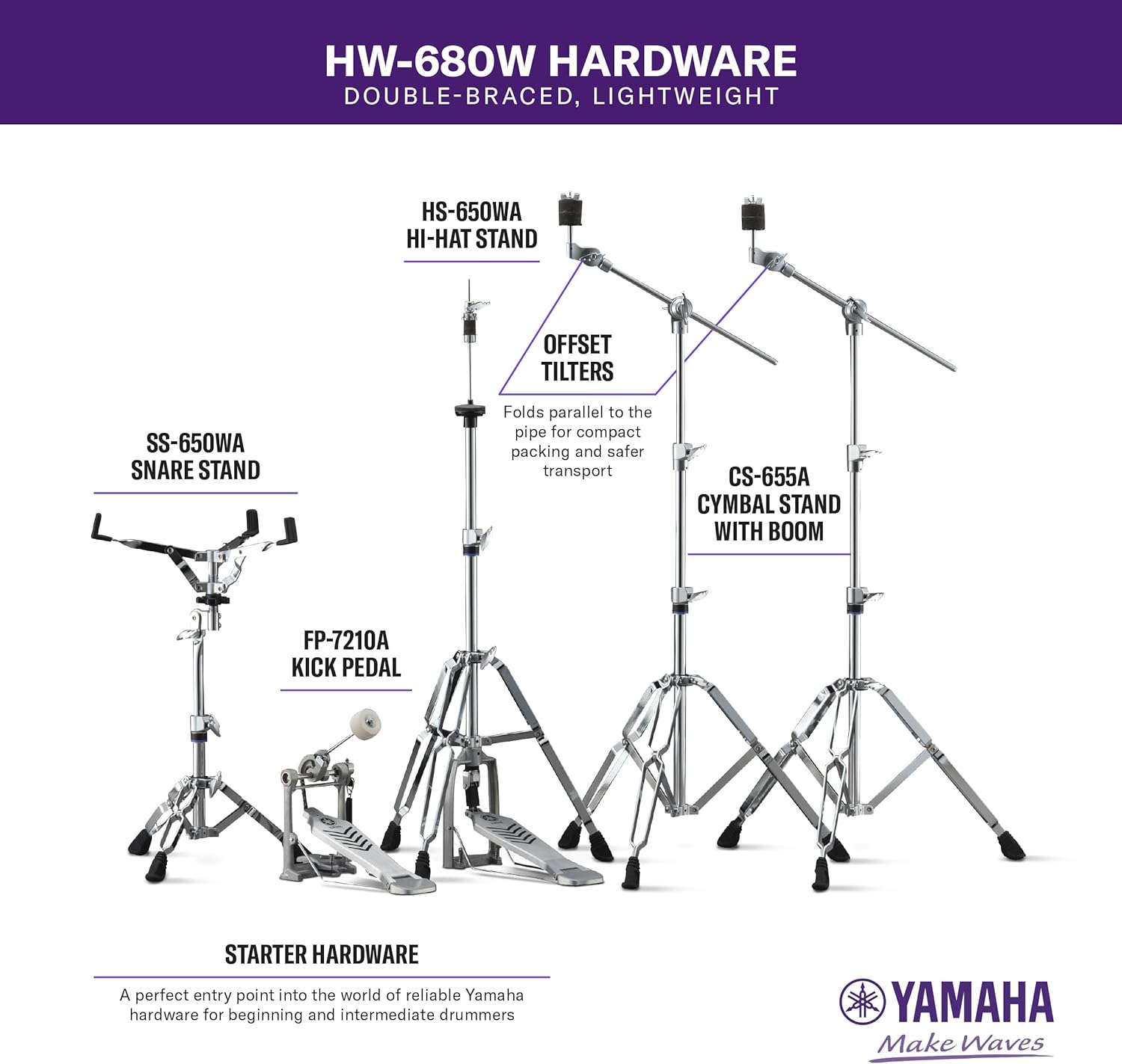
Yamaha
$327.99
In stock on Amazon
Check price on AmazonMid-Tier Packs for Local Gigging and Versatile Use
Medium-duty hardware packs — typically street-priced between $350 and $480 — represent the sweet spot for most working drummers at the local and regional level. Double-braced legs, thicker tubing, and memory lock systems are standard at this tier. Memory locks are small threaded collars that clamp onto a stand’s tubing at your preferred height, so you can collapse and re-extend to the exact same position without re-adjusting by feel every night. Sound On Sound’s “Setting Up Your Drum Kit” describes memory locks as one of the most underrated time-savers in a live drummer’s rig — and many lightweight packs simply omit them.
The Pearl 930 series and Tama Stage Master hardware packs are the names that come up most consistently in this tier, across both Sweetwater’s Drum Hardware Buying Guide and MusicRadar’s Best Drum Hardware Packs 2025. Gibraltar’s Road Series also draws frequent mentions from club-level drummers as a durable, no-frills option that offers medium-duty build quality without a premium brand markup. For a drummer playing 30 to 50 local gigs per year, a quality mid-tier pack typically holds up without issue through regular transport and reassembly.
Hidden carry costs deserve mention here. A hardware bag — the padded cylindrical carrier that protects stands in transit — runs $60 to $120 for a reliable one and isn’t optional once you’re loading gear regularly. A heavy-duty bass drum pedal bag adds another $30 to $50. Budget $90 to $170 in carrying costs from day one; they’re not optional line items.

Yamaha
$339.99
In stock on Amazon
Check price on AmazonHeavy-Duty Packs for Touring and High-Demand Use
Professional-tier hardware packs — street-priced from $600 to $900 and above — are built for players doing 100-plus gigs per year, working outdoor stages, or operating in conditions where other people handle the gear during load-in and load-out. Double-braced stands with thicker main shafts, precision-machined locking systems, and component-level quality throughout define this category.
Pearl’s 900 series, DW’s 9000-tier hardware, and Tama’s Iron Cobra hardware pack are the benchmarks in this range. MusicRadar’s Best Drum Hardware Packs 2025 positions the heavy-duty tier as rewarding specifically for players doing sustained touring rather than occasional regional gigs — the build quality advantage compounds over hundreds of setups in a way that doesn’t become apparent until you’re doing the math on how many times a stand has been folded and redeployed in a year. DW’s 9000 series receives the strongest marks for professional touring longevity but is priced accordingly; for most intermediate drummers, the cost is difficult to justify unless sustained high-volume touring is the explicit use case.
Drumhead Magazine’s hardware pack coverage notes that Tama’s leg-locking mechanisms are among the most durable in the mid-to-heavy tier for repeated setup cycles, making the Iron Cobra hardware bundle a strong choice for players who want professional-grade longevity without the full DW price point.
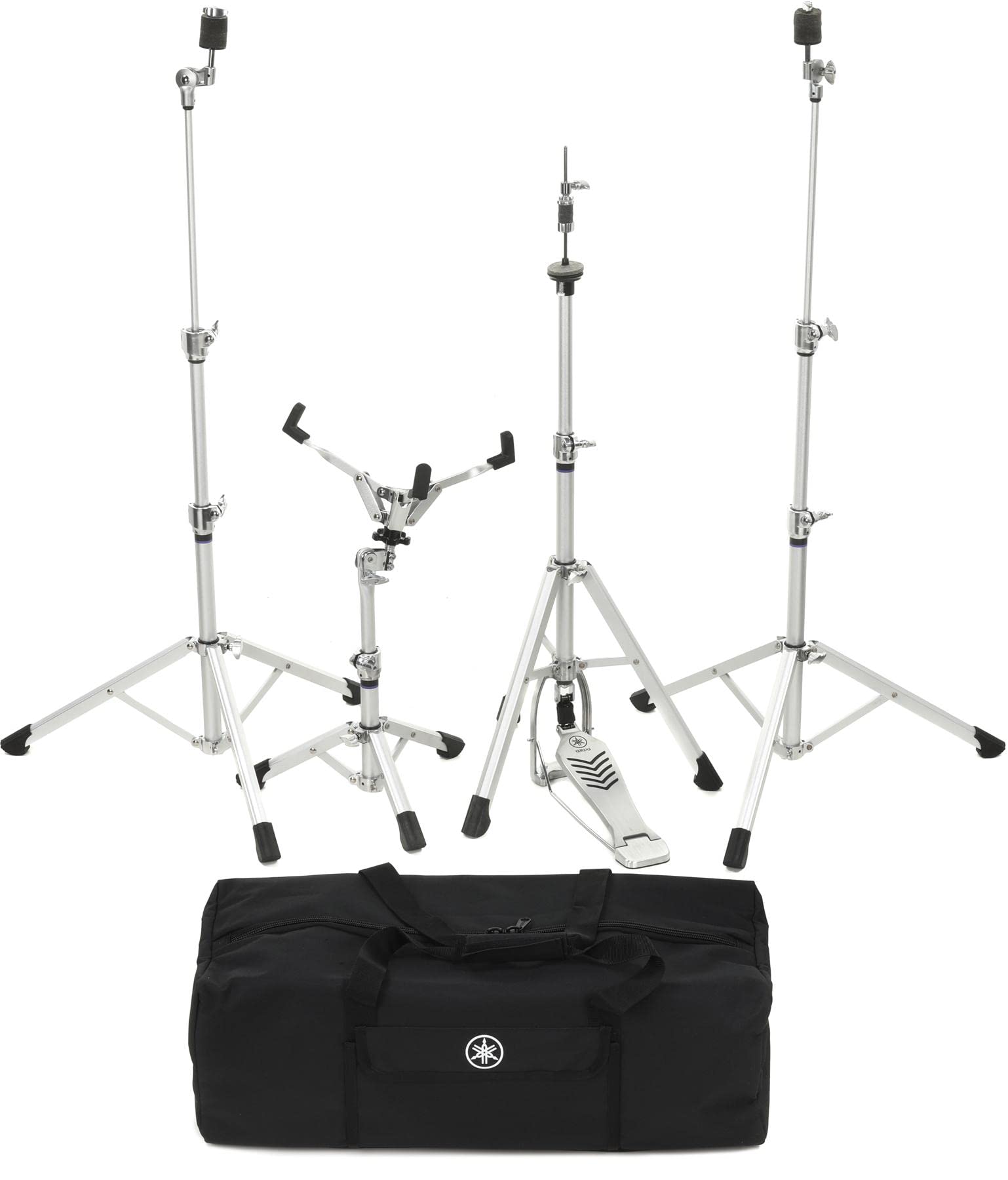
Yamaha
$479.99
In stock on Amazon
Check price on AmazonThe Home-Player Case: Where You Can Legitimately Save
If your kit lives in one room and you never transport it, the argument for spending $600 and above on hardware is mostly about playing intensity and personal preference, not structural necessity. A well-made lightweight to mid-weight pack from Pearl, Tama, Gibraltar, Mapex, or Yamaha will hold up through years of regular practice in a static setup.
The real calculus for home players is different from gigging players: instead of prioritizing transport durability, prioritize adjustability and ergonomics. Home players often spend more total time fine-tuning setup across longer sessions — adjusting heights, boom angles, and snare basket positions — so smooth tilt adjustment on boom arms, easy-adjusting basket angles, and hi-hat stands that don’t develop slip matter more than raw structural weight.
Players who’ve moved from lightweight to mid-tier hardware in home setups consistently report that the main upgrade they noticed wasn’t load-bearing strength — it was the quality-of-life feel of adjustments. Locking mechanisms that don’t require over-tightening wing nuts, boom arms that hold their angle under a heavy ride cymbal, and hi-hat stands that stay at height through a two-hour session.
One underappreciated option in the home-player context is Yamaha’s hardware line, which receives consistent positive marks in MusicRadar’s Best Drum Hardware Packs 2025 for smooth, quiet adjustments and solid construction at mid-tier prices — yet gets overlooked in hardware-specific discussions that default to the Pearl and Tama conversation.
The practical guidance for home players: if budget is constrained, buy a lightweight to mid-tier pack from a reputable brand and redirect savings toward a better standalone bass drum pedal. The pedal is where you’ll feel the quality gap most directly during every playing session. Heads and cymbals will also have more immediate sonic impact per dollar than upgrading hardware for its own sake.
The Decision Rule
Here’s the clean version, calibrated to where you actually are:
If you gig regularly (20-plus shows per year), play at high intensity, or transport your kit more than occasionally: Buy mid-to-heavy-duty hardware — Pearl 930 or 900 series, Tama Stage Master or Iron Cobra tier, or Gibraltar Road Series. Budget $350 to $600 for the pack, plus $90 to $170 for carry bags. Treat the included pedal as provisional and budget a standalone upgrade. The extra spend pays back in stands that still hold their adjustments after 80 setups.
If you play primarily at home, your kit stays assembled, and you’re practicing or recording in one room: A quality mid-tier pack is sufficient, and a lightweight pack is defensible at moderate playing intensity. Redirect savings toward a better standalone bass drum pedal or toward heads and cymbals where the sonic return is higher. Do not buy the absolute cheapest hardware pack on the market — the quality floor matters, and entry packs from unestablished brands have a poor track record in aggregated owner coverage reported by Drumhead Magazine.
If you’re somewhere in between — occasional rehearsal-space use, a show every few months — the mid-tier pack is the right call. The cost difference over lightweight is modest; the added adjustability and build quality pays dividends in both live and home contexts. You’re not over-buying; you’re buying once instead of twice.
Hardware is one of the few drum purchases where getting the tier right from the start saves more than it costs. Shells and cymbals get upgraded because players want new sounds. Hardware gets replaced because it failed. Buy the tier that matches your actual use, budget the carry costs from day one, and your kit’s infrastructure becomes a problem you stop thinking about — which is exactly the point.