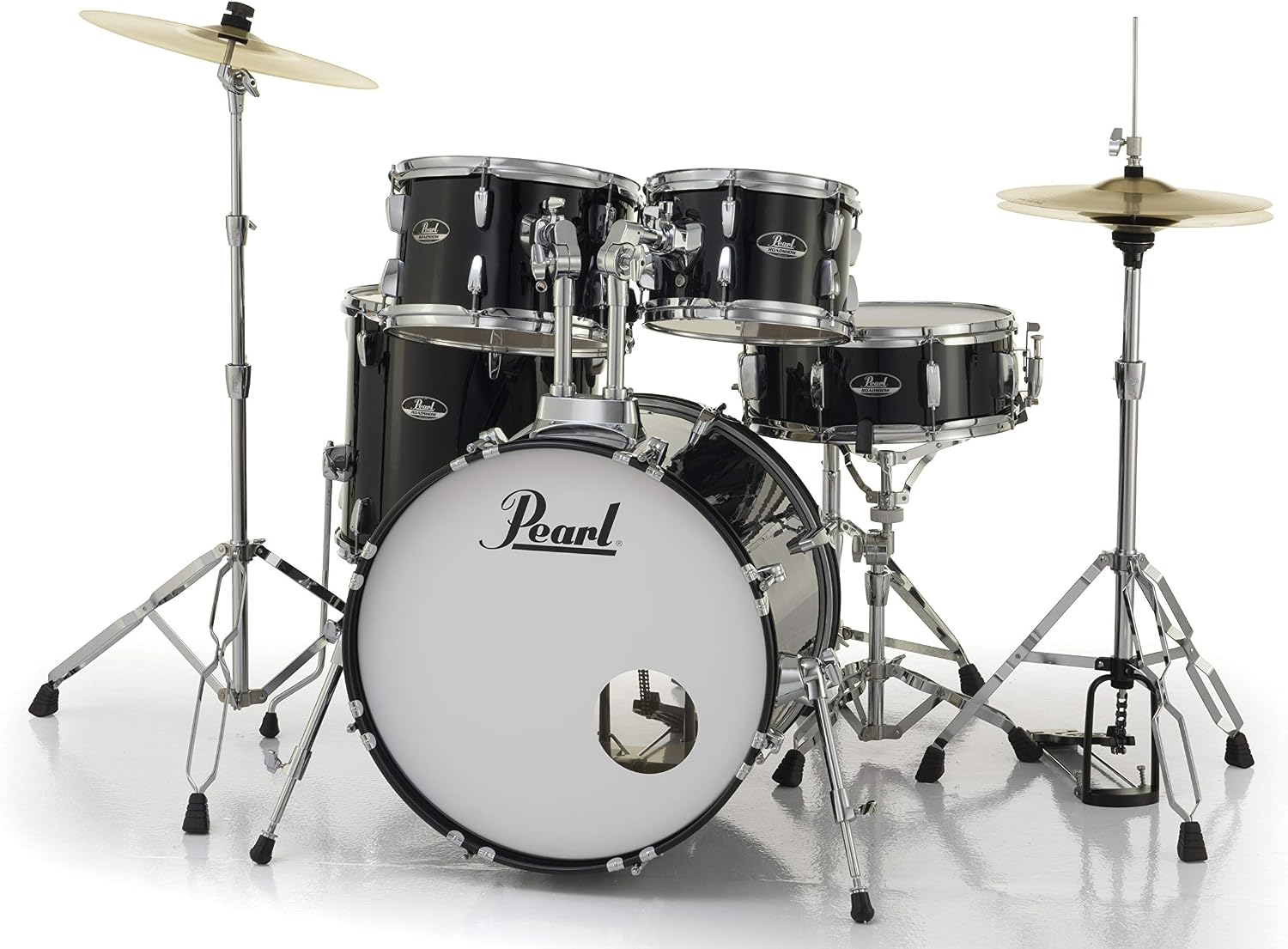
If you started drumming on a beginner kit — that’s an entry-level acoustic drum set, usually a five-piece configuration with a bass drum, snare, three toms, and a set of basic cymbals bundled together at the factory — you already know the feeling. The kit got you playing. It built the habit. And now, somewhere around month six or year one, it’s quietly become the ceiling. The hardware (the metal stands and mounts holding everything together) rattles. The cymbals crash when you want them to shimmer. The shells — the wooden cylinders that actually produce the drum tone — sound dull no matter what you do to the tuning. This article is for the moment right after that realization: when you know an upgrade is coming, you’re not quite sure where the money is best spent, and you don’t want to repeat the beginner mistake of buying on brand recognition alone. We’ll walk through what actually changes at the intermediate level, which purchases deliver the most audible return, and how to think about the tradeoffs before you commit.
What Actually Changes When You Move Up a Price Tier
The single biggest difference between a $300 starter kit and a $900–$1,400 intermediate kit isn’t the look. It’s the wood.
Entry-level shells are typically made from poplar or basswood — affordable, workable timbers that are fine for learning but compress the tonal range of the drum. Mid-tier and professional shells switch to maple, birch, or mahogany. Each has a character:
- Maple runs warm and full through the low-mids, with a long sustain (the length of time a note rings after you hit it). It’s the default for studio work and most genre-agnostic playing.
- Birch runs brighter, with a faster attack (the initial crack of the stick hitting the head) and tighter sustain. Reviewers at MusicRadar consistently note it punches well in live environments and cuts through a mix.
- Mahogany sits between the two — warmer than birch, with more body in the low end than maple. Less common at the intermediate tier, but worth knowing.
The second major change is hardware quality. Mid-tier kits use thicker tom mounts, more stable bass drum spurs (the metal feet that keep the kick from sliding), and better tension rods (the screws that tune the drum head). This matters practically: your kit holds tune longer, wobbles less on stage, and survives the back of a van.
Third is head quality. Most beginner kits ship with heads that experienced players describe, bluntly, as “drum-shaped cardboard.” Mid-tier kits still don’t always come with professional heads — but the shells underneath are good enough that swapping to a quality head actually makes a difference. Per Sweetwater’s drum kit buying guide, a quality batter head (the top head you strike) is often the fastest and cheapest upgrade a player can make to any kit.
The Three Upgrade Paths — and What Each One Costs You
When intermediate players upgrade, they’re usually choosing between three approaches. Understanding the tradeoffs before you decide will save you from buyer’s remorse.
Path 1: Full Kit Replacement ($800–$1,400 for shells only)
This is the clean-slate option: sell or store the starter kit and buy a purpose-built mid-tier shell pack (the shells without cymbals or hardware) or a complete kit.
The case for it: You get consistent voicing across all the drums — they were designed and built together, so they tune and respond as a matched set. You also get better hardware standard.
The case against it: You’re paying for toms, bass drum, and snare simultaneously, which dilutes your budget. If your snare is already doing its job (snare drums are often the most upgrade-worthy piece on a budget kit), you’re replacing something that didn’t need replacing.
What players are actually buying here (based on aggregated forum discussion and review patterns as of mid-2026):
- Pearl Export EXX (~$900 complete) — the floor of what gigging drummers take seriously. Poplar/basswood hybrid shells, but Pearl’s hardware reputation is well-earned. Owners report it holds tune reliably in hot venues.
- Tama Imperialstar (~$750–$900 complete) — birch shells at this price are unusual. MusicRadar’s reviewers flag it as punching above its weight class.
- Yamaha Stage Custom Birch (~$1,100–$1,300 shell pack) — the benchmark mid-tier reference. Drumhead Magazine’s coverage of shell construction consistently holds Yamaha’s birch sourcing and bearing edges (the angled lip at the top of the shell where the drum head seats, which dramatically affects tone) as among the most consistent in the price range.
- Pearl Session Studio Select (~$1,200–$1,500 shell pack) — a step toward the serious end. Maple/African mahogany hybrid with a noticeably warmer voice. Owners in long-run reviews frequently describe it as the last kit they bought before going custom.
Path 2: Component Upgrade (Snare + Cymbals First)
Rather than replacing the whole kit, you keep the shells and surgically upgrade the pieces that matter most to your sound.
The snare drum is the most audible single upgrade you can make to a drum kit. It’s the centerpiece of every backbeat (the accented hit on beats 2 and 4 that you feel in most popular music). Intermediate players consistently report that moving from a starter snare to a steel or maple snare between 5” and 6.5” depth changes the character of their entire sound.
The cymbals are arguably even more important. Entry-level cymbals are typically made from a brass alloy that produces a harsh, one-dimensional crash. Mid-tier cymbals — B20 bronze, an alloy of 80% copper and 20% tin — open up into complex, layered overtones that develop and decay in waves rather than cutting off abruptly. Sound On Sound’s recording drums guide notes that cymbal quality shows up on recordings more ruthlessly than almost any other element.
The math on this path:
| Component | Entry-Level | Mid-Tier Upgrade | Cost Delta |
|---|---|---|---|
| Snare drum | Included in kit | Standalone 14” maple/steel | +$150–$350 |
| Hi-hats | Bundled brass | B20 bronze 14” pair | +$250–$500 |
| Ride cymbal | Bundled brass | B20 20” ride | +$200–$450 |
| Crash cymbal | Bundled brass | B20 16” or 18” crash | +$150–$300 |
Total component upgrade range: $750–$1,600 — comparable to a full kit replacement, but you’re investing in the pieces that stay with you through multiple future kit changes.
The case for this path: Cymbals, especially quality ones, hold resale value exceptionally well. A used Zildjian A Custom or Sabian HHX crash from 2020 sells in 2026 for 60–75% of its original street price, per resale patterns across major drum forums. Compare that to complete starter kits, which depreciate to near zero.
Path 3: The Hybrid — Shell Pack + Your Own Hardware and Cymbals
The most cost-efficient path for a player who already has cymbals and stands they trust: buy a mid-tier shell pack only (no hardware, no cymbals), and build around what you already own.
This is how working drummers in the $1,000–$1,500 budget range maximize tone-per-dollar. A Yamaha Stage Custom shell pack without the hardware attached runs roughly $200–$300 less than the same kit in a complete configuration. If your stands are already solid (Pearl, Tama, DW, or Gibraltar hardware at the mid-tier holds up), that’s a meaningful savings redirected at better shells.
The risk: hardware compatibility. Not all tom mounts, bass drum risers, and hi-hat stands are cross-compatible with every shell pack. Before buying a shell-only configuration, confirm the mount system (most Pearl kits use their proprietary OPTI-LOC system; Yamaha uses a different tom arm diameter standard) matches what you already own — or budget for adapters.
The Hidden Costs Nobody Lists in the Headline Price
This is where first-time upgraders consistently get surprised:
Drum heads: Most shell packs ship with budget heads that should be replaced immediately for accurate tone assessment. Budget $80–$150 for a full set of Remo Ambassador or Evans G2 heads (both well-reviewed by Sweetwater and MusicRadar as the industry-standard starting point for mid-tier shells).
Tuning time: Better shells reveal tuning problems. If you haven’t spent real time with a drum key learning to seat and tension heads evenly, budget the time — or a lesson — before evaluating whether a new kit sounds right.
Cases and bags: A mid-tier kit represents $800–$1,500. Semi-hardshell drum bags run $200–$400 for a full set. Skipping this and relying on blankets is how good shells develop cracks in transit.
Throne and pedal: If you’ve been playing on the hardware that came with your starter kit, a quality throne (drum seat) and bass drum pedal represent real ergonomic and performance upgrades. A DW 5000 or Pearl Demon Drive pedal alone runs $180–$350, but players who’ve made the switch consistently describe it as transformative for footwork development.
The Decision Rule
Here’s the if/then framework, stated plainly:
If your primary frustration is cymbal tone — harsh crashes, washy hi-hats, a ride that has no definition — then start with cymbals. Buy B20 bronze before you buy new shells. The shells aren’t the bottleneck.
If your primary frustration is that the drums themselves sound dead, tubby, or unresponsive even after new heads and careful tuning, then the shells are the bottleneck. A shell pack upgrade will yield immediate, audible results.
If you’re starting to record or play live with a band regularly, then the snare drum is your single best first investment. It appears in almost every song, on every beat, and listeners and sound engineers notice its quality before anything else.
If you’re working with a budget under $600, then wait and save rather than buying a mid-tier complete kit in a rush. The gap between a $400 starter kit and a $600 mid-tier kit is smaller than the gap between a $600 kit and a $900 one. The compounding improvements in wood quality, hardware stability, and head compatibility really click in at the $800+ range.
The upgrade that matters most is the one you’ll actually use — and the one that removes the specific friction holding your playing back right now. Know which problem you’re solving before you open your wallet, and you’ll spend once instead of twice.