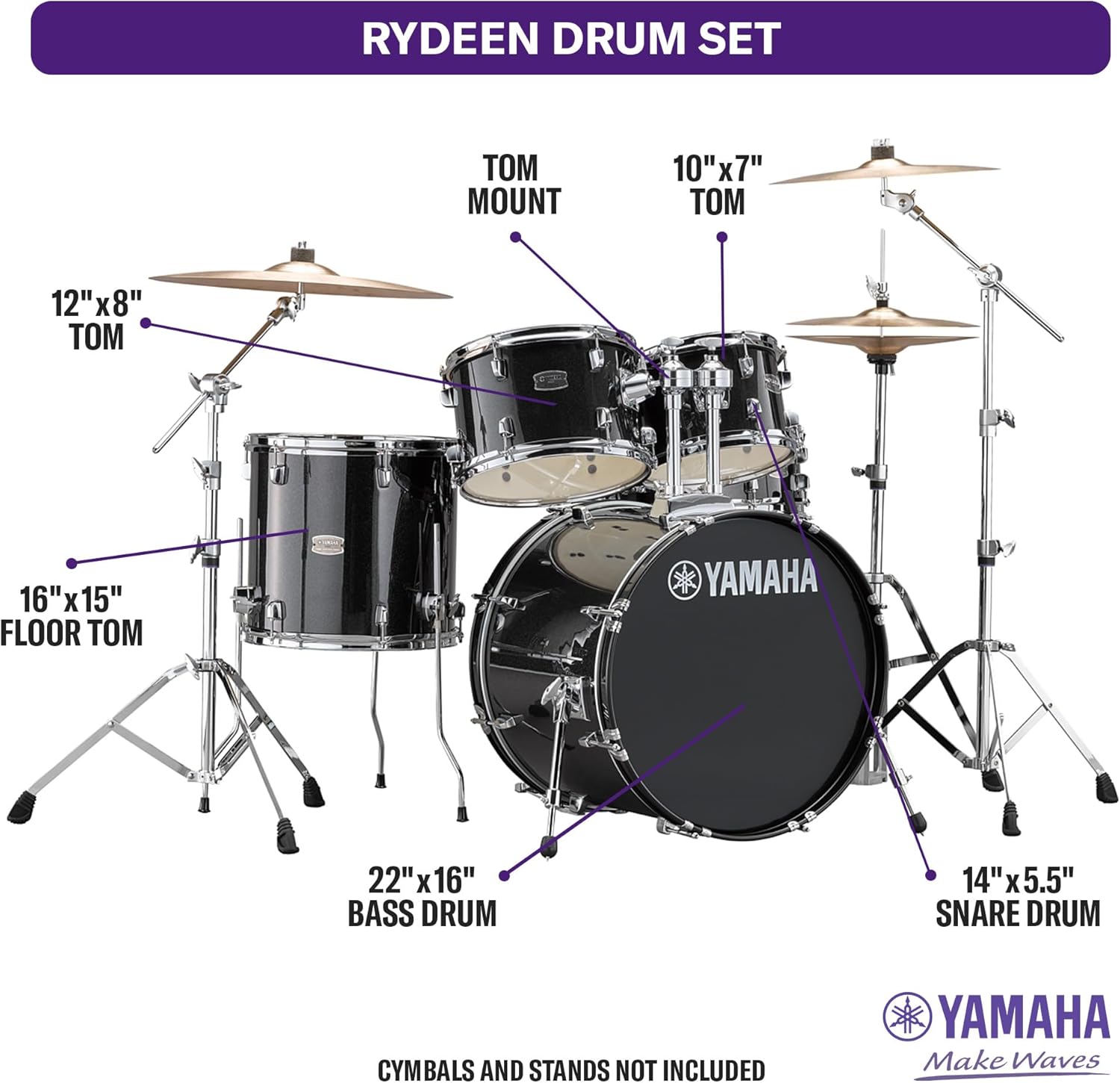
You found a shell pack that stopped you mid-scroll. The sizes are right, the finish is gorgeous, and the price feels manageable. A shell pack is exactly what it sounds like: just the drums themselves — the cylindrical wooden shells, wrapped or lacquered, with no hardware, no cymbals, no heads included beyond whatever the manufacturer decides to throw in. It’s the starting point of a kit, not the finished product. That distinction is where a lot of intermediate buyers get surprised. The number on the product page is an entry fee, not a total. Before you commit, you need a clear picture of what the fully assembled, gig-ready version of that kit actually costs — because the gap between sticker price and out-the-door cost is reliably larger than first-timers expect, and even players with a deal or two under their belts sometimes undercount it.
This article walks you through every spending category in order, shows you the math, and ends with a clear decision rule for matching your budget to your actual situation.
| EDITOR'S PICK[PDP Concept Maple Shell Pack](https://www.amazon.com/dp/B08K2L4S2X?tag=greenflower20-20) -… | Mid-tier[Yamaha Rydeen 5pc Shell Pack](https://www.amazon.com/dp/B01NBVQQEO?tag=greenflower20-20) wi… | Budget pick[Griffin 6 Piece Drum Hardware P](https://www.amazon.com/dp/B00584ZKAS?tag=greenflower20-20)… | |
|---|---|---|---|
| Shell count | 7 | 5 | — |
| Bass drum size | — | 22" | — |
| Material | Maple | — | — |
| Hardware incl. | ✗ | ✗ | ✓ |
| Throne incl. | — | — | ✓ |
| Price | $1,299.99 | $499.99 | $152.00 |
| See on Amazon → | See on Amazon → | See on Amazon → |
The Shell Pack Itself: What You’re Actually Buying
Let’s ground the anchor number first. In 2026’s market, acoustic shell packs cluster into a few distinct tiers:
- Entry-to-intermediate: $400–$900 (Pearl Export, Tama Imperialstar, Ludwig Accent)
- Serious intermediate: $900–$1,800 (Pearl Session Studio Select, Mapex Saturn V, Gretsch Renown)
- Professional: $1,800–$4,500+ (DW Collector’s Series, Tama Starclassic Maple, Yamaha Recording Custom)
A “shell pack” in the intermediate-and-up tiers typically includes a bass drum, snare drum, and two or three toms. That’s it. No stands, no bass drum pedal, no cymbal arms, no heads beyond factory-installed ones, and almost certainly no cymbals. Sweetwater’s drum hardware buyer’s guide makes this explicit: hardware is considered a fully separate purchase category, and buyers who assume otherwise routinely overspend or under-buy.
Factory-installed heads — the drumheads that come mounted on the shells from the manufacturer — are almost universally considered placeholder heads. They’re batter heads (the top heads you actually strike) and resonant heads (the bottom heads that complete the drum’s tuning system) chosen to keep the price point clean, not to optimize sound. MusicRadar’s roundup of best drum heads in their recent buying guide notes that most working drummers replace both batter and resonant heads within the first month of owning a new kit, treating the factory set as temporary.
Hardware: The Most Underestimated Line Item
This is where the math gets uncomfortable. “Hardware” refers to the metal stands, mounts, clamps, and mechanisms that hold everything up: hi-hat stand, snare stand, two or three cymbal stands, bass drum pedal, and throne (the drum stool). If your shell pack includes a mounting system — a rack, or RIMS-style tom mounts — that changes the calculus slightly, but not as much as you’d hope.
Here’s a realistic breakdown for a mid-tier hardware package:
| Item | Budget Option | Mid-Grade Option |
|---|---|---|
| Bass drum pedal | $80–$150 | $200–$400 |
| Hi-hat stand | $70–$120 | $150–$250 |
| Snare stand | $50–$90 | $100–$180 |
| Cymbal stands (×2–3) | $40–$70 each | $90–$160 each |
| Drum throne | $60–$100 | $150–$300 |
| Total range | ~$380–$680 | ~$800–$1,490 |
Owners in long-run forum discussions on sites like drummerworld consistently report that budget hardware fails at the worst moments — a wobbly cymbal stand mid-gig, a hi-hat clutch that won’t stay put. The upgrade instinct is real. If you’re buying hardware once and want it to last through regular gigging or studio work, mid-grade from Pearl, Tama, or DW ($800–$1,200 for a complete set) is the practical floor. Sweetwater’s drum hardware buyer’s guide recommends treating hardware as a long-term investment separate from the shell pack budget, specifically because players tend to keep hardware through multiple shell pack changes.
Drumheads: Replace Immediately, Budget Accordingly
Factory heads are functional for learning what a drum can do; they’re not where most kits live at their best. The standard intermediate move is to replace batter heads within the first few weeks, and resonant heads shortly after, once you’ve settled on your tuning preferences.
Realistic drumhead budget for a five-piece kit:
- Batter heads (bass drum + snare + 3 toms): $80–$200 depending on brand and series
- Resonant heads (same configuration): $50–$130
- Total: $130–$330
Remo and Evans are the dominant mid-to-pro choices. Remo’s Emperor and Ambassador lines and Evans’ G2 and EC2 series are what experienced drummers reference most consistently when discussing all-around batter performance. MusicRadar’s head buyer’s guide notes that the Evans UV series has picked up significant traction with players who want a head that holds tuning longer under heavy hitting. For the bass drum specifically, a dedicated bass drum batter (Evans EMAD, Remo Powerstroke 3) is a separate line item from your standard tom batters — budget $30–$60 for that one head alone.
Cymbals: The Biggest Variable in the Entire Budget
Cymbals are where the range explodes. A complete functional setup — hi-hats, a ride cymbal, and one or two crashes — can run from $200 to $3,000+ depending on the line. This isn’t hyperbole; it’s the category where drummers most often either underinvest (buying bronze-washed steel beginner cymbals that sound harsh and lose their character fast) or make brilliant long-term investments (used Zildjian A or K cymbals, Sabian HHX, Meinl Byzance) that hold or gain value.
Cymbal budget landmarks:
- Starter packs (Zildjian ZBT, Meinl HCS, Sabian Solar): $150–$350 for a set — functional, reasonable for practice and early gigs, but with acknowledged tone limitations
- Mid-grade (Zildjian A, Sabian AA, Meinl Pure Alloy): $500–$1,200 to build a complete setup — where sound quality starts feeling professional
- Pro-grade (Zildjian K Custom, Sabian HHX, Meinl Byzance): $1,200–$3,000+ — widely owned by working professionals, strong resale value
The resale angle matters here. Zildjian K and Sabian HHX cymbals bought used at 50–60% of retail hold their value in a way that entry-level cymbal packs simply do not. If you’re at the intermediate stage and willing to buy used, the cymbal category is where the smartest dollar-stretching happens. Owners consistently report finding near-mint Zildjian A customs and Meinl Byzance rides at drum swap meets and online used-gear markets for 40–50% off retail.
The Hidden Costs Nobody Puts in the Headline
Even after hardware, heads, and cymbals are accounted for, experienced buyers know there are several more line items waiting:
Drum rug: A non-negotiable for acoustic playing unless you enjoy chasing your kick drum across a hardwood floor. Quality options run $30–$120. Owners repeatedly flag this as a forgotten first purchase.
Drum key: The small T-shaped tuning tool that tightens and loosens the tension rods on each drumhead. Usually $5–$15. Obvious, frequently forgotten.
Sticks and mallets: A starting investment of $20–$60 for a few pairs in your primary size, plus brushes or rods if your playing contexts demand them.
Bass drum accessories: A bass drum pillow or muffling ring ($15–$40), sometimes a resonant head port ring ($10–$20) if you’re muffling for a tighter sound. Sound On Sound’s guide on recording drums specifically flags bass drum muffling as one of the most overlooked variables in getting a usable recorded sound.
Cases and bags: If the kit moves at all — to gigs, rehearsal spaces, studios — you’ll want bags for each shell and a bag or case for hardware. A complete soft-case set for a five-piece runs $100–$350. Hard cases for serious road use start at $500 and climb fast.
Acoustic treatment or isolation: For home use, cymbal noise and kit resonance can be significant. Mesh head conversion for practice, a practice pad setup, or riser platforms (Roc-N-Soc, Pearl, or DIY options) add $100–$600 depending on how seriously you’re managing volume.
The Full Math: Three Budget Scenarios
Here’s what a realistically complete acoustic setup costs across three buyer profiles:
| Category | Hobbyist (home play) | Working Intermediate | Serious Gigging Pro |
|---|---|---|---|
| Shell pack | $600 | $1,400 | $3,000 |
| Hardware | $450 | $900 | $1,400 |
| Drumheads | $150 | $220 | $300 |
| Cymbals | $350 | $900 | $2,000 |
| Accessories (rug, key, sticks, bags) | $100 | $250 | $500 |
| Total | ~$1,650 | ~$3,670 | ~$7,200 |
These numbers align with what Sweetwater’s gear advisors cite as realistic complete-kit budgets when customers ask for honest out-the-door estimates, not just shell pack pricing.
The Depreciation and Resale Reality
Not all acoustic kit spending depreciates equally. Shell packs from DW, Tama Starclassic, and Gretsch USA Custom hold resale value well — owners report recouping 55–75% of purchase price on well-maintained kits in active resale markets. Entry-level shell packs from off-brand or deeply discounted manufacturers tend to fetch 20–35% of original price, if they sell at all.
Hardware depreciation is middle-of-the-road: quality stands from Pearl or DW hold value reasonably well, but hardware as a category is rarely a financial win on resale. Cymbals from Zildjian, Sabian, and Meinl’s pro lines are the strongest resale performers in the entire category — sometimes appreciating if the model is discontinued.
The Decision Rule
If you’re currently looking at a shell pack and trying to decide whether your budget works, here’s the framework:
If your total available budget is under $1,500: Consider a complete kit (shells + hardware + cymbals bundled) from Pearl, Ludwig, or Tama rather than building from a shell pack. You’ll get functional, matched gear faster without gap-filling surprises.
If your budget is $1,500–$3,500: A mid-tier shell pack plus quality used cymbals and mid-grade hardware is achievable and smart. Prioritize hardware quality over cymbal flash at this range — a solid stand set outlasts trends. Buy cymbals used from the Zildjian A or Sabian AA tier.
If your budget clears $3,500: You’re in the zone where a serious shell pack, complete mid-to-pro hardware set, and a solid starting cymbal collection (or excellent used pro cymbals) all fit. Don’t let the shell pack price anchor crowd out the accessory budget — the last 20% of the spend is often what makes the kit feel professional rather than merely functional.
The sticker on the shell pack is real. The total is always higher. Know the full number before you click, and the instrument you actually end up with will match the one you imagined.